
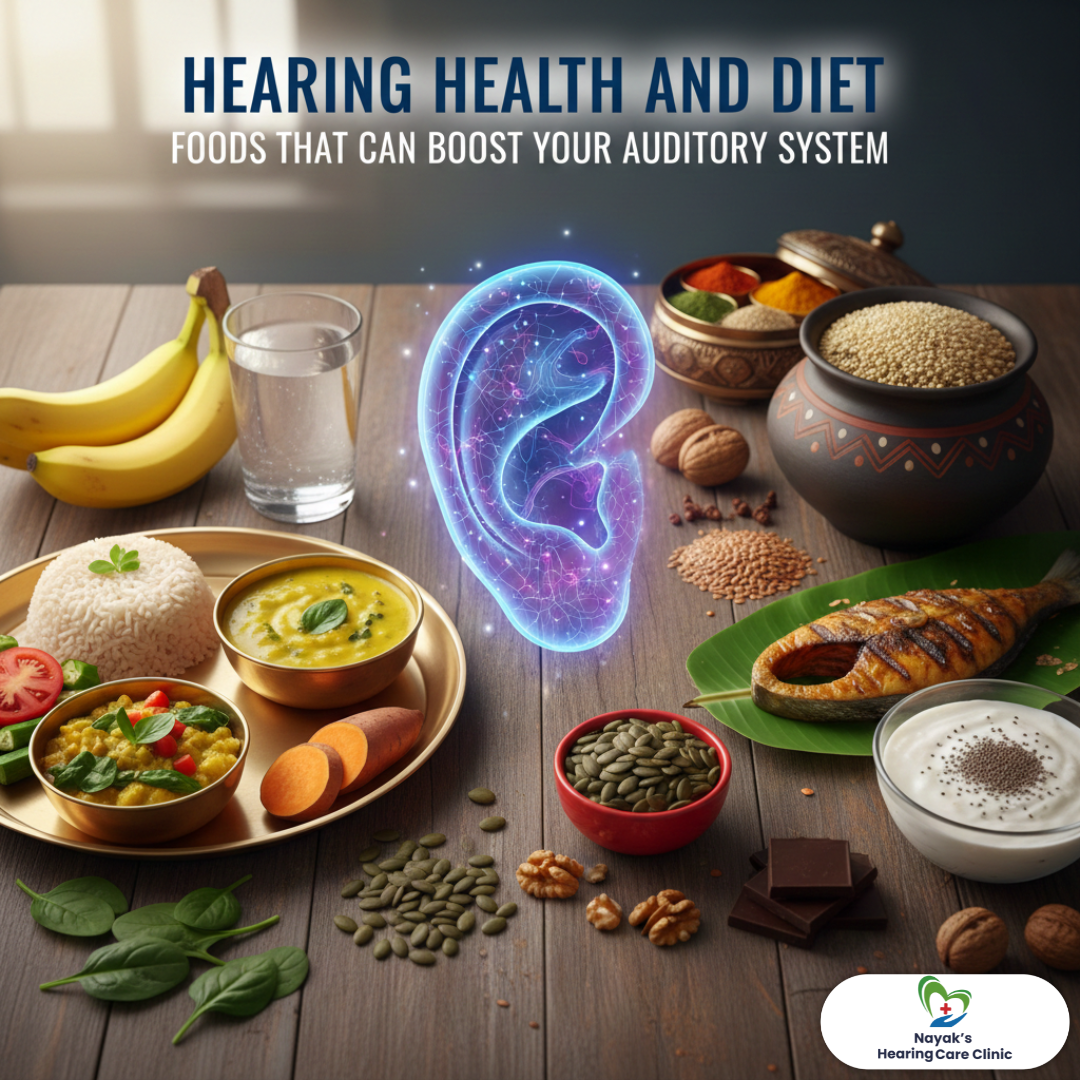
In our fast paced urban lives in India, from the honking streets of Bangalore to the bustling markets of Mumbai, we often take our senses for granted. We protect our eyes with sunglasses and our skin with sunscreen, but how often do we think about protecting our ears through what we eat?
At Nayaks Speech and Hearing Clinic, we believe that hearing health is holistic. While advanced hearing aids and speech therapy are vital, the foundation of a sharp auditory system begins on your plate.
In this comprehensive guide, we will explore the deep connection between nutrition and hearing and how traditional Indian dietary staples can be your secret weapon against hearing loss.
The Science: How Does Food Affect Hearing?
The human ear is an incredibly delicate organ. The inner ear (cochlea) relies on tiny hair cells to convert sound waves into nerve impulses. These cells depend on constant, healthy blood flow and are highly susceptible to “oxidative stress”, damage caused by free radicals in the body.
Poor nutrition can lead to:
Reduced Blood Flow: High cholesterol and poor circulation can “starve” the ear of oxygen.
Nerve Damage: Deficiencies in B vitamins can slow down the transmission of sound signals to the brain.
Age Related Hearing Loss (Presbycusis): Lack of antioxidants speeds up the degradation of auditory cells.
1. Potassium: The Regulator of the Inner Ear
As we age, the levels of fluid in our inner ear can drop. Potassium is responsible for regulating the fluid in your body tissue and blood. Since the part of the ear that translates noises into signals the brain can understand (the cochlea) relies on potassium, it is a crucial mineral for hearing.
Best Indian Sources of Potassium:
Bananas: The ultimate convenient snack.
Potatoes and Sweet Potatoes: A staple in Indian curries.
Coconut Water: India’s favorite natural hydrator is packed with potassium.
Spinach (Palak): Incorporating Palak Paneer or Dal Palak into your diet is an excellent way to boost intake.
2. Zinc: The Immunity Booster for Your Ears
Zinc is known for its ability to boost the immune system, helping you fight off ear infections. However, it also plays a role in cell growth and healing. Some studies suggest that zinc may even be effective in treating tinnitus (ringing in the ears) and sudden hearing loss.
Best Indian Sources of Zinc:
Chickpeas (Chole): A powerhouse of protein and zinc.
Lentils (Dal): The backbone of the Indian diet.
Dark Chocolate: A treat that’s actually good for your ears!
Pumpkin Seeds (Kaddu ke Beej): Great for snacking or garnishing salads.
3. Folic Acid (Folate): Sustaining Blood Flow
Folate is a B vitamin that helps the body create new healthy cells. For the auditory system, it helps maintain high blood flow to the inner ear by keeping homocysteine levels (an inflammatory compound) in check.
Best Indian Sources of Folate:
Okra (Bhindi): A beloved vegetable in Indian households.
Broccoli and Asparagus: Increasingly popular in modern Indian kitchens.
Eggs: An easy source of folate for non vegetarians.
Papaya: A seasonal fruit that supports overall ear health.
4. Magnesium: The Shield Against Noise-Induced Hearing Loss
Ever been to a loud wedding or a Diwali party and felt your ears ringing afterward? Magnesium acts as a protective barrier for the hair cells in the inner ear when they are exposed to loud noises. It prevents the goldmine of free radicals generated during loud noise exposure from damaging the delicate structures of the ear.
Best Indian Sources of Magnesium:
Almonds (Badam) and Cashews (Kaju): Traditional Indian nuts that are dense in magnesium.
Whole Grains: Switching from white rice to brown rice or millets (Jowar, Bajra, Ragi) can significantly increase your magnesium intake.
Yogurt (Curd/Dahi): A staple in every Indian meal.
5. Omega-3 Fatty Acids: Heart Health is Ear Health
What’s good for your heart is almost always good for your ears. Omega-3s strengthen the blood vessels in your ear’s sensory system. Research has shown that adults who eat fish twice a week have a 42% lower risk of developing age related hearing loss.
Best Indian Sources of Omega-3:
Fish: For those in coastal regions like Karnataka, Goa, or Kerala, fatty fish like Rohu, Hilsa, or Sardines are excellent.
Walnuts (Akhrot): The vegetarian best friend for Omega-3.
Flaxseeds (Alsi): Can be ground and added to atta (flour) or smoothies.
Chia Seeds: Often used in faloodas or puddings.
6. Vitamin D: Bone Health for Your Ears
You might know Vitamin D is good for your legs and spine, but did you know your ear contains the three smallest bones in the human body? If these bones (the malleus, incus, and stapes) weaken due to Vitamin D deficiency, it can lead to conductive hearing loss.
Best Indian Sources of Vitamin D:
Sunlight: The “Sunshine Vitamin” is abundant in India, but many of us stay indoors. 15 minutes of morning sun is essential.
Mushrooms: One of the few plant sources of Vitamin D.
Fortified Milk and Oil: Look for labels that mention added Vitamin D.
The Indian Superfood Ear Health Checklist
To make it easier for you, here is a quick reference table to plan your weekly groceries:
| Nutrient | Benefit for Ears | Indian Food Sources |
| Potassium | Regulates inner ear fluid | Bananas, Coconut Water, Spinach |
| Zinc | Fights infections & Tinnitus | Chickpeas, Lentils, Pumpkin Seeds |
| Magnesium | Protects against loud noise | Almonds, Millets (Ragi/Bajra), Dahi |
| Omega-3 | Improves circulation | Walnuts, Flaxseeds, Fatty Fish |
| Vitamin C/E | Antioxidant protection | Amla, Oranges, Guava, Peanuts |
Foods to Avoid for Better Hearing
Just as some foods help, others can hinder. If you are struggling with hearing issues or want to prevent them, try to limit the following:
Excessive Salt: Too much sodium can cause fluid retention in the ears, which can be problematic for people with Meniere’s Disease.
Trans Fats: Found in many fried street foods (Samosas, Pakoras), these can reduce blood flow to the ears.
Refined Sugars: High sugar levels can lead to diabetes, which is a major risk factor for hearing loss due to damaged blood vessels.
Practical Tips for the Indian Household
1. The Power of Tadka
Use spices like Turmeric. Curcumin, the active ingredient in turmeric, has powerful anti inflammatory properties that protect the nerves in the auditory system.
2. Swap Your Grains
Instead of plain white rice every day, introduce Millets. India is the millet capital of the world. Ragi is rich in calcium and magnesium, while Bajra is excellent for overall energy and circulation.
3. Hydrate Wisely
Replace sugary sodas with Buttermilk or Lemon Water. Staying hydrated ensures that the blood remains thin enough to circulate through the tiny capillaries in your ears.
When Diet Isn’t Enough: Recognizing the Signs
While a healthy diet is a fantastic preventive measure, it cannot cure existing permanent hearing loss or structural damage. It is important to monitor your hearing health regularly.
Ask yourself:
Do I struggle to hear conversations in crowded Indian restaurants?
Do I often ask people to repeat themselves during phone calls?
Do I turn up the TV volume higher than others in my family?
If you answered “Yes” to any of these, it may be time for a professional evaluation.
Why Choose Nayaks Speech and Hearing Clinic?
At Nayaks Speech and Hearing Clinic, we combine the science of audiology with a compassionate, patient-centered approach. We understand the unique challenges faced by the Indian population, from noise pollution in our cities to the dietary habits that influence our health.
Our services include:
Comprehensive Audiometry Tests: To determine the exact nature of your hearing.
Latest Hearing Aid Technology: Discreet, rechargeable, and AI-powered devices.
Speech Therapy: For children and adults.
Nutritional Counseling: Guidance on how to support your treatment through diet.
Conclusion
Your hearing is a bridge to the world, it allows you to enjoy the laughter of your grandchildren, the rhythm of your favorite Bollywood songs and the safety of hearing a vehicle on the road. By incorporating potassium rich bananas, magnesium heavy almonds and zinc packed lentils into your daily diet, you are investing in a lifetime of sound.
Take care of your ears today so they can take care of you tomorrow.